Agricultural machinery and farm equipment operate in environments where metal components are frequently exposed to moisture, soil, fertilizers, pesticides, and outdoor weather conditions. These factors can accelerate corrosion and significantly affect the durability and reliability of agricultural machinery components.
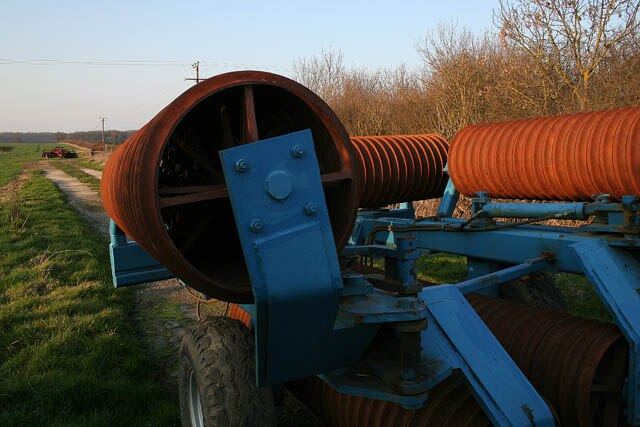
Studies on agricultural equipment degradation indicate that farming environments can create conditions where corrosion and wear occur simultaneously due to exposure to soil particles, moisture, and agricultural chemicals. As a result, corrosion resistance has become an important consideration when designing and manufacturing components for modern agricultural machinery.
Improving corrosion resistance in farm equipment is therefore not only a matter of choosing the right manufacturing process. Instead, it depends on a combination of material selection, surface protection, and component design. Manufacturing methods such as precision metal casting can support these solutions by enabling the production of corrosion-resistant alloys and optimized component geometries.
Corrosion Challenges in Agricultural Machinery Environments
Agricultural machinery components often operate in highly corrosive environments. Several factors contribute to corrosion in farm equipment:
1. Exposure to Moisture and Outdoor Conditions
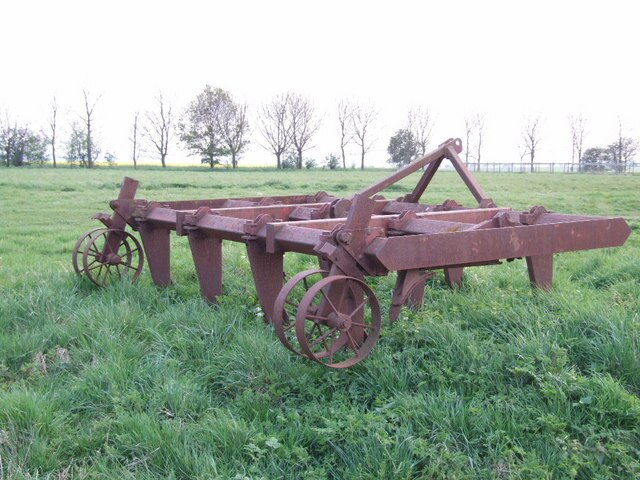
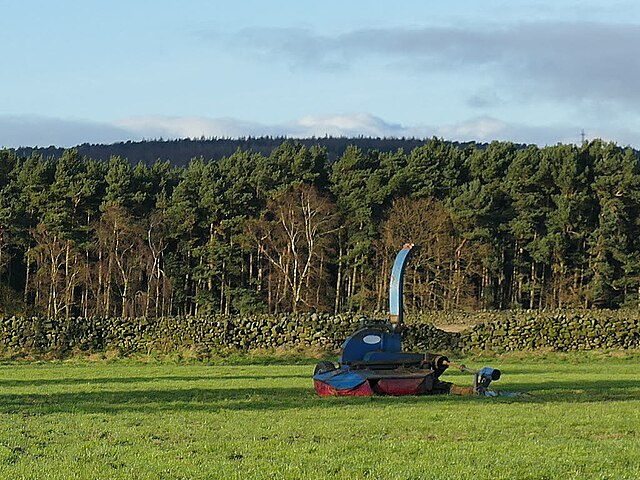
Agricultural equipment is typically used outdoors for extended periods. Continuous exposure to rain, humidity, and temperature variations can accelerate oxidation and corrosion of metal surfaces.
2. Fertilizers and Agricultural Chemicals
Fertilizers, pesticides, and herbicides used in modern farming often contain chemical compounds that can promote corrosion. Equipment used for spraying or chemical handling is especially exposed to corrosive substances.
3. Soil and Organic Materials
Many agricultural components are in direct contact with soil and organic materials. Soil moisture combined with mineral content can create electrochemical conditions that promote corrosion.
Because of these environmental conditions, corrosion is one of the major durability challenges affecting agricultural machinery components.
You can learn more about how manufacturing processes improve structural strength and durability in our article: How Investment Casting Improves Durability in Agricultural Machinery Components and Farm Equipment Parts.
Engineering Approaches to Improve Corrosion Resistance
Improving corrosion resistance in agricultural equipment involves several engineering strategies
Material Selection
Selecting appropriate materials is one of the most effective ways to improve corrosion resistance. Common materials used in agricultural machinery include:
- Carbon and alloy steels for high strength structural parts
- Stainless steels such as 304 and 316 for components exposed to moisture and chemicals
- Specialized alloys for highly corrosive environments
Stainless steels are widely used in pumps, valves, irrigation systems, and fluid handling components where resistance to water and agricultural chemicals is required.
Selecting corrosion-resistant stainless steel requires understanding the Pitting Resistance Equivalent Number (PREN). Learn how PREN is calculated and used in material selection in our article: Pitting Resistance Equivalent Number: How To Measure.
Selecting corrosion-resistant stainless steel requires understanding the Pitting Resistance Equivalent Number (PREN). Learn how PREN is calculated and used in material selection in our article: Pitting Resistance Equivalent Number: How To Measure.
Surface Protection and Coatings
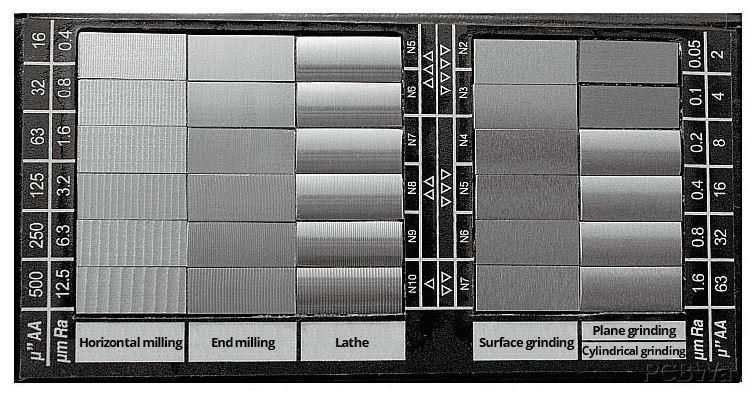
Surface treatments are often applied to improve corrosion resistance. Examples include:
- protective coatings
- plating processes
- surface passivation
- paint or powder coatings
These treatments help protect metal surfaces from direct exposure to corrosive environments.
Component Design
Proper design can also reduce corrosion risk.
For example:
- avoiding crevices where moisture can accumulate
- improving drainage of liquids
- optimizing surface geometry to reduce contamination buildup
Design considerations are therefore an important part of corrosion control in agricultural machinery components.
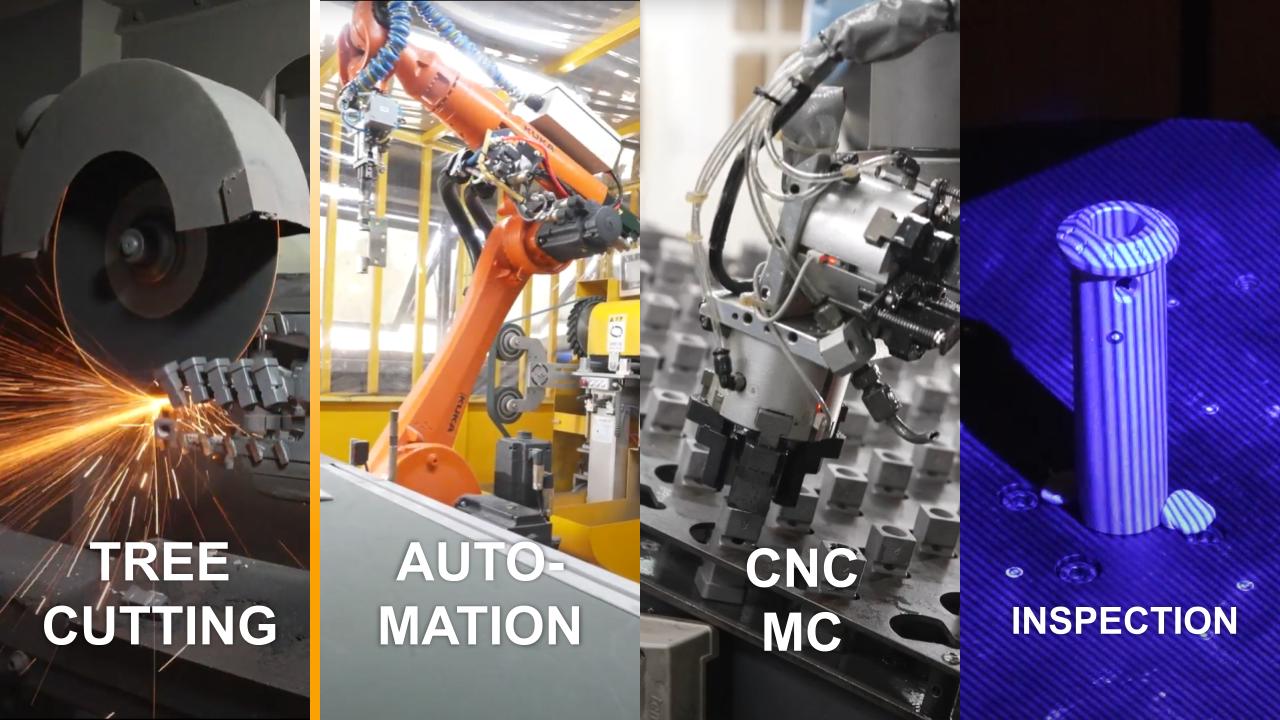
Waterson provides a range of surface treatment and finishing processes to support corrosion-resistant components. Learn more in Waterson’s Capabilities section.
The Role of Precision Metal Casting in Corrosion-Resistant Components
While metal casting itself does not eliminate corrosion, it plays an important role in enabling corrosion-resistant engineering solutions.
Precision metal casting processes, including precision investment casting, allow manufacturers to produce complex components using a wide range of corrosion-resistant alloys.
Key advantages include:
1. Flexibility in Material Selection
Precision casting enables the use of materials such as:
- stainless steels
- alloy steels
- corrosion-resistant specialty alloys
This flexibility allows engineers to select materials suited to specific agricultural environments.
2. Optimized Component Geometry
Casting processes allow complex geometries that may improve durability and corrosion resistance.
Examples include:
- integrated designs that eliminate welded joints
- smooth internal passages for fluid systems
- shapes that reduce contamination buildup
These design advantages can contribute to improved performance in agricultural applications.
3. Consistent Manufacturing Quality
Precision casting can also achieve consistent dimensional accuracy and repeatability, which is important for components used in pumps, valves, and hydraulic systems.
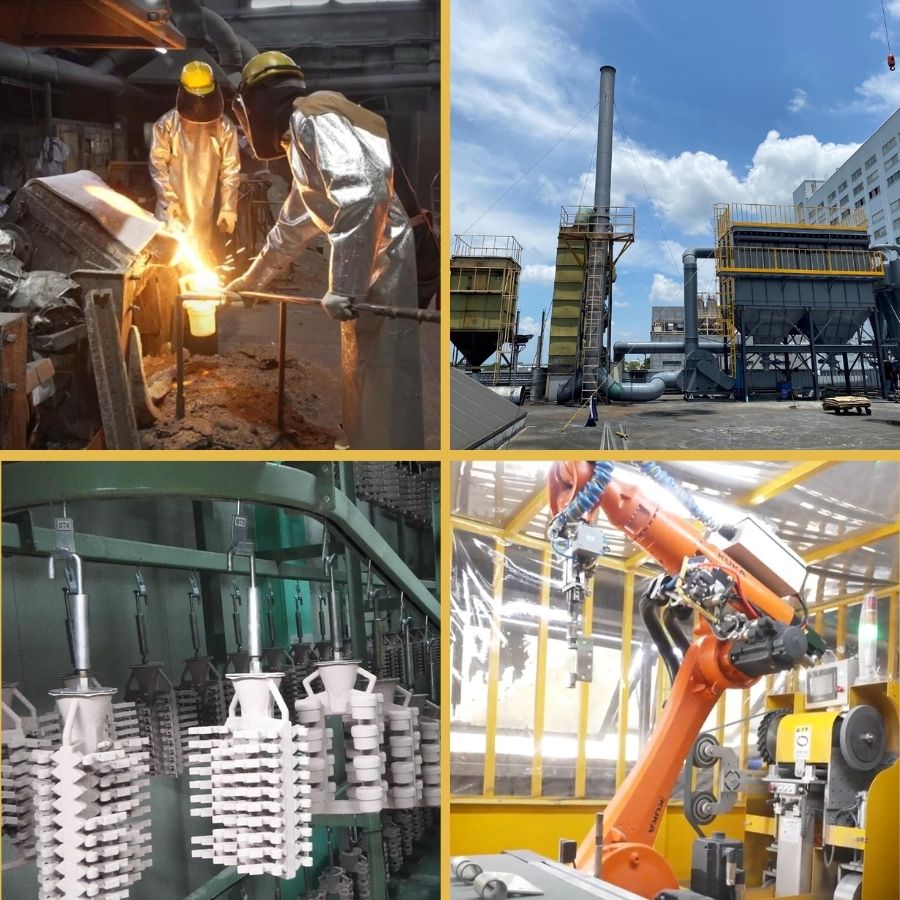
Applications of Corrosion-Resistant Cast Components in Agricultural Machinery
Corrosion-resistant cast components are commonly used in various agricultural equipment systems.
Typical examples include:
Fluid Handling Systems
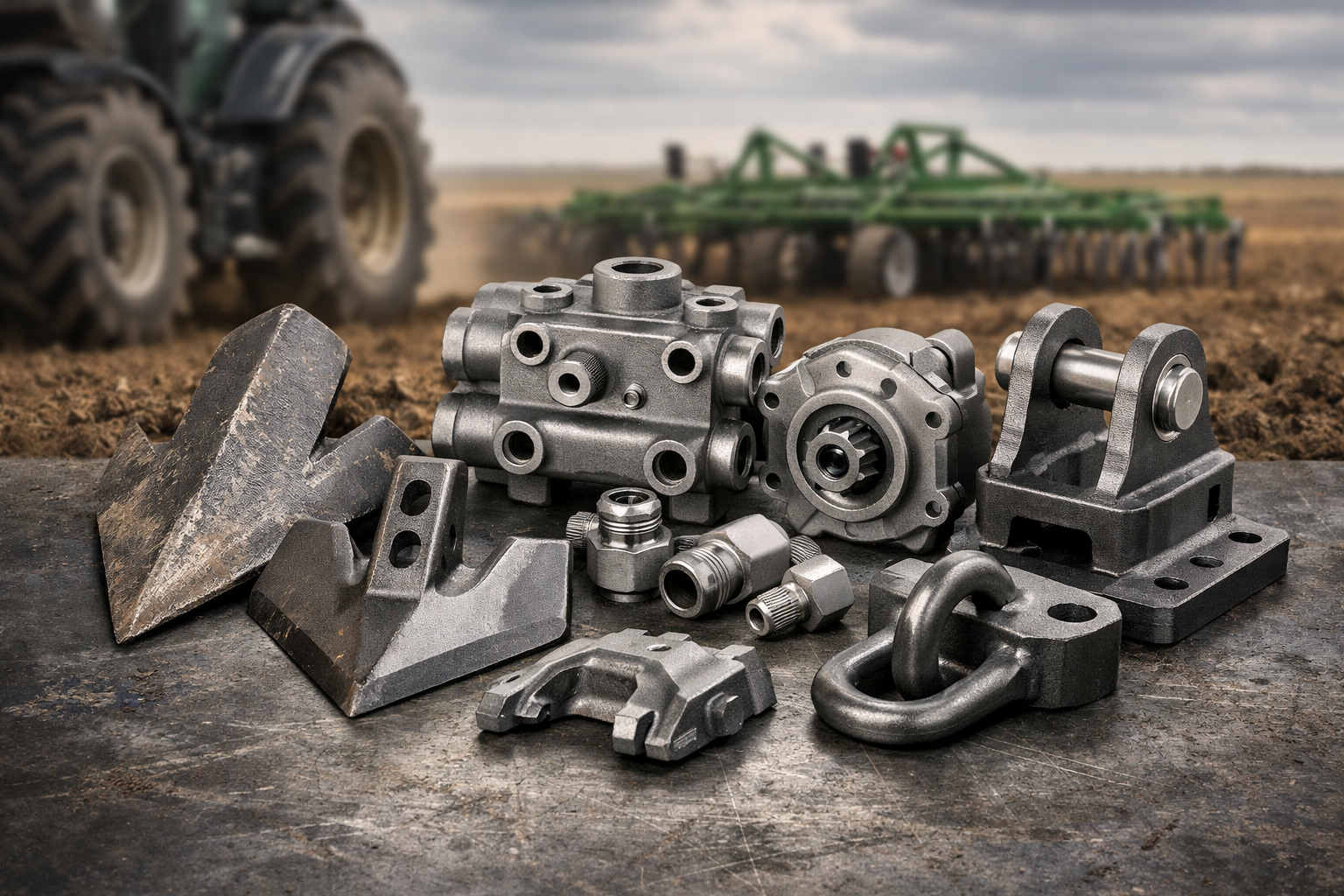
- pump housings
- valve bodies
- pipe connectors
These components frequently handle water, fertilizers, or agricultural chemicals.
Irrigation and Spraying Equipment
- fertilizer sprayer components
- irrigation system parts
- chemical distribution systems
Corrosion-resistant materials help extend equipment lifespan in these environments.
Mechanical and Structural Components
Certain brackets, housings, and structural parts also benefit from corrosion-resistant materials when exposed to outdoor conditions.
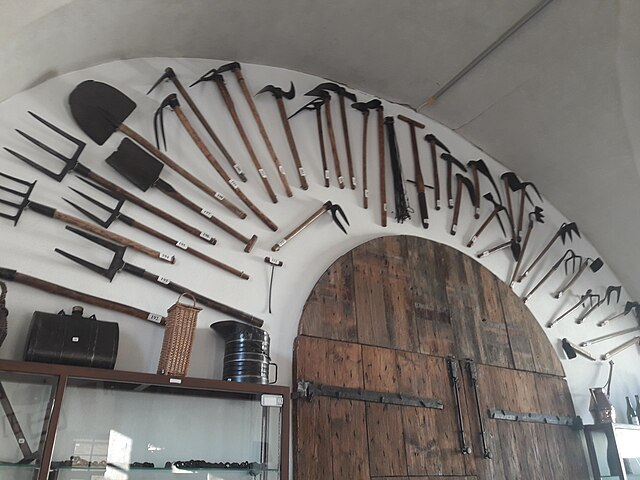
Engineering Solutions for Corrosion-Resistant Agricultural Components
Corrosion remains a significant challenge for agricultural machinery components operating in demanding farming environments. Exposure to moisture, soil, fertilizers, and agricultural chemicals can accelerate material degradation and reduce equipment reliability.
Improving corrosion resistance therefore requires a combination of material selection, protective surface treatments, and thoughtful component design.
Manufacturing technologies such as precision metal casting and precision investment casting support these engineering strategies by enabling the use of corrosion-resistant alloys and optimized component geometries.
Waterson Corporation specializes in precision investment casting solutions for demanding industrial applications, offering integrated capabilities from casting and machining to a wide range of surface finishing processes. By combining suitable materials with advanced manufacturing and finishing technologies, Waterson helps manufacturers develop durable agricultural machinery components designed for long-term performance in demanding farming environments.
If you are developing corrosion-resistant agricultural components, our engineering team would be glad to discuss your project requirements. Please feel free to contact us at info@waterson.com !
Why Choose Waterson Investment Casting?
At Waterson Corporation, we don’t just offer competitive pricing, we deliver real value. Our expertise in precision investment casting is built on what matters most to today’s global buyers:
- Reliable part performance
- Dimensional accuracy
- Consistent quality
- Regulatory compliance(CBAM, RoHS, REACH )
We understand that in markets like the U.S. and EU, your casting supplier needs to meet more than just cost targets. You need a partner who supports your sustainability goals, provides full traceability, and helps reduce your total cost of ownership through dependable supply and technical support.
If you’re looking for a casting manufacturer that delivers long-term value, not just parts, we’re here to help. Contact us at info@waterson.com to discuss your next project. Let’s build something better together!
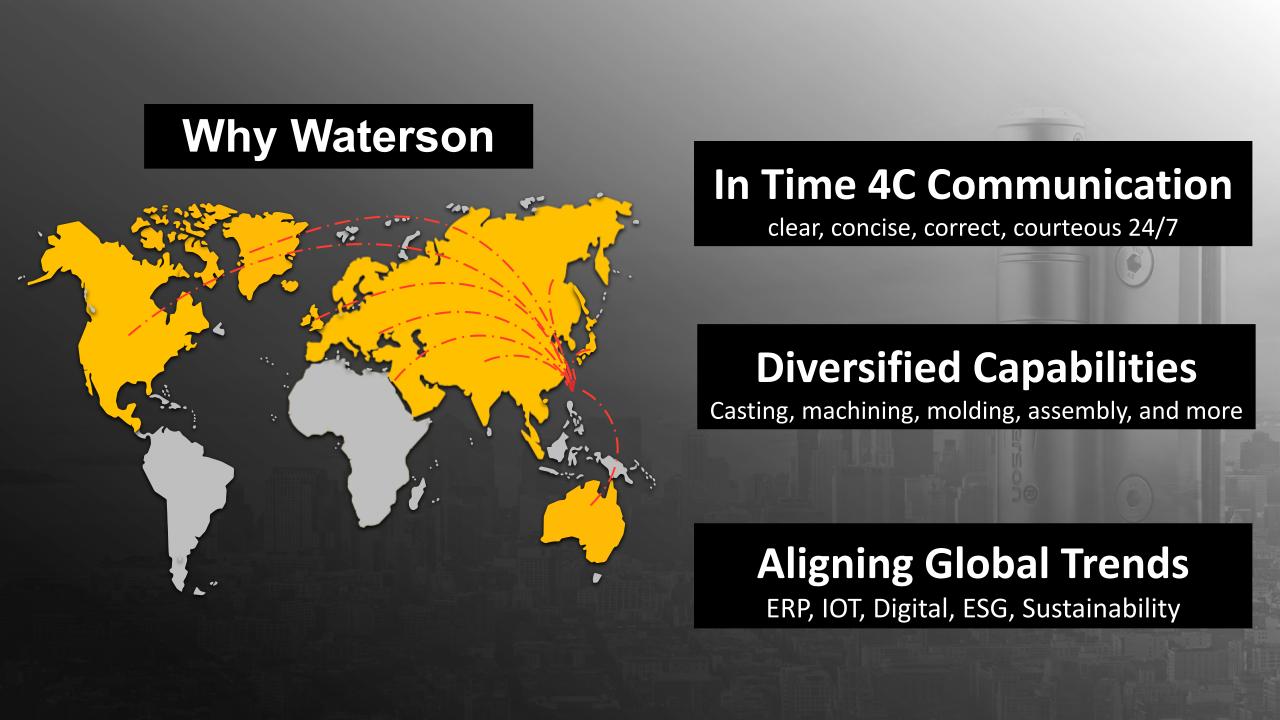
Why Waterson Investment Casting Methods Stand Out
Waterson Corporation is a leading metal products manufacturer specializing in components for the most challenging global applications. Clients benefit from Waterson’s investment casting process, which excels in precision, durability, and surface quality—delivering unmatched reliability and performance across diverse applications.
- Precision Casting: Intricate, robust components for demanding industries.
- Superior Finish: Near-perfect surfaces with minimal processing.
- ISO 2768 Standard: Exceeds aerospace, marine, and petrochemical benchmarks.
- Versatile Materials: Tailored solutions in stainless steel and alloys with efficient material cost.
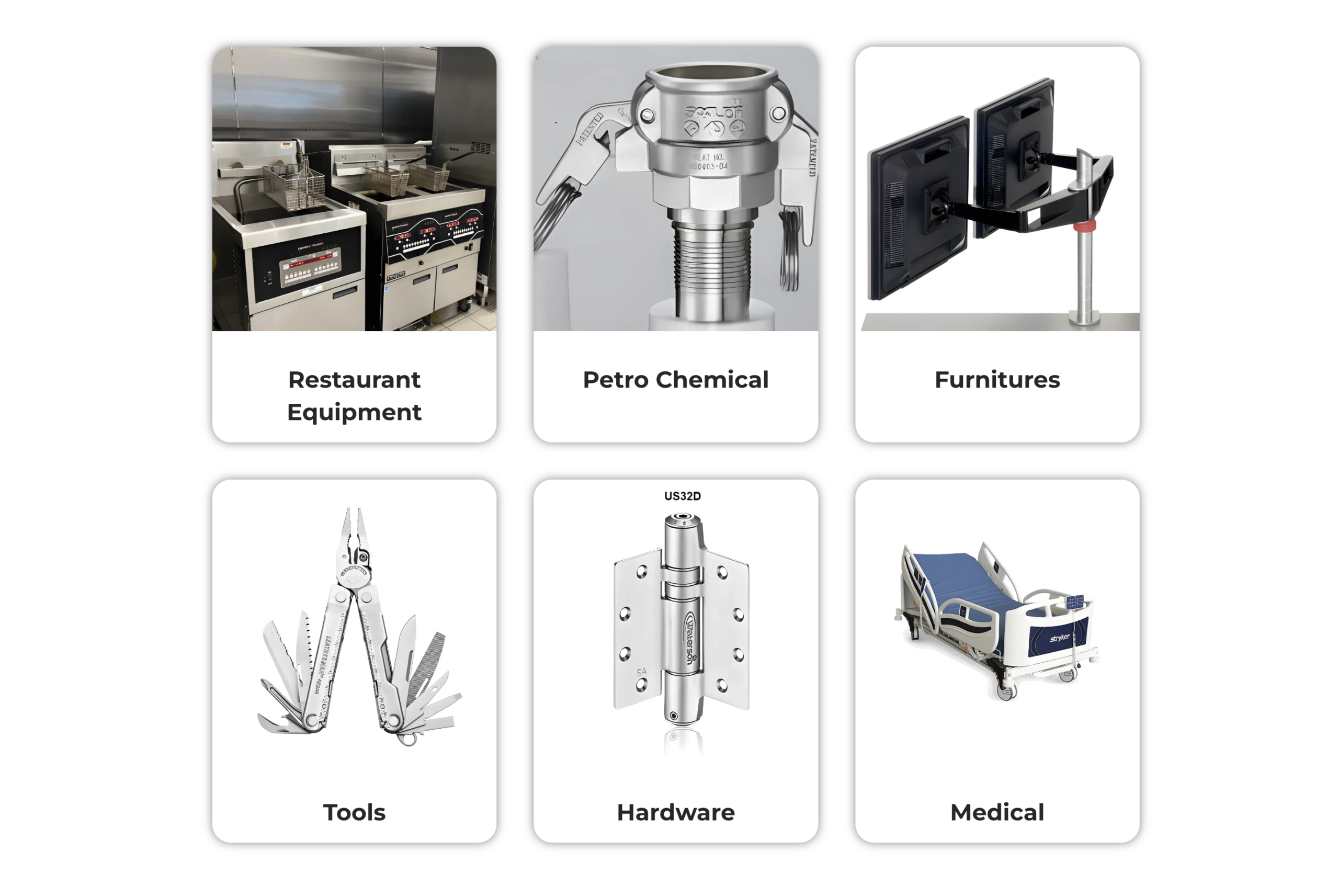
Waterson Stainless Steel Investment Casting Solutions
Waterson Precision Investment Casting is a wax-based foundry located in Taiwan specializing in stainless steel precision casting. It delivers high-volume, consistently high-quality castings to industries such as petrochemicals, medical equipment, marine, hand tools, professional safety equipment and wireless communication equipment. With an impressive 95% above self-production rate, Waterson’s production line encompasses mold design, fluid analysis, wax model creation, shell making, dewaxing, metal pouring, post-processing (e.g., acid pickling, alkaline treatment), sandblasting, heat treatment, machining, assembly, and packaging. Its stainless steel production line supports materials such as 304 (CF8), 316 (CF8M), and 17-4 stainless steel. Currently, there is available production capacity, feel free to contact info@waterson.com.