Why Core Removal Matters in Complex Casting Parts
In precision casting, the removal of ceramic cores is a critical step, particularly for components with complex internal geometries. These internal features often serve functional purposes such as fluid flow, weight reduction, or thermal management.
Incomplete core removal may result in internal blockage, reduced performance, or reliability concerns during service. As a result, selecting an appropriate core removal method is an important consideration in both process planning and product quality assurance.
Water Jet Core Removal: Strengths and Limitations
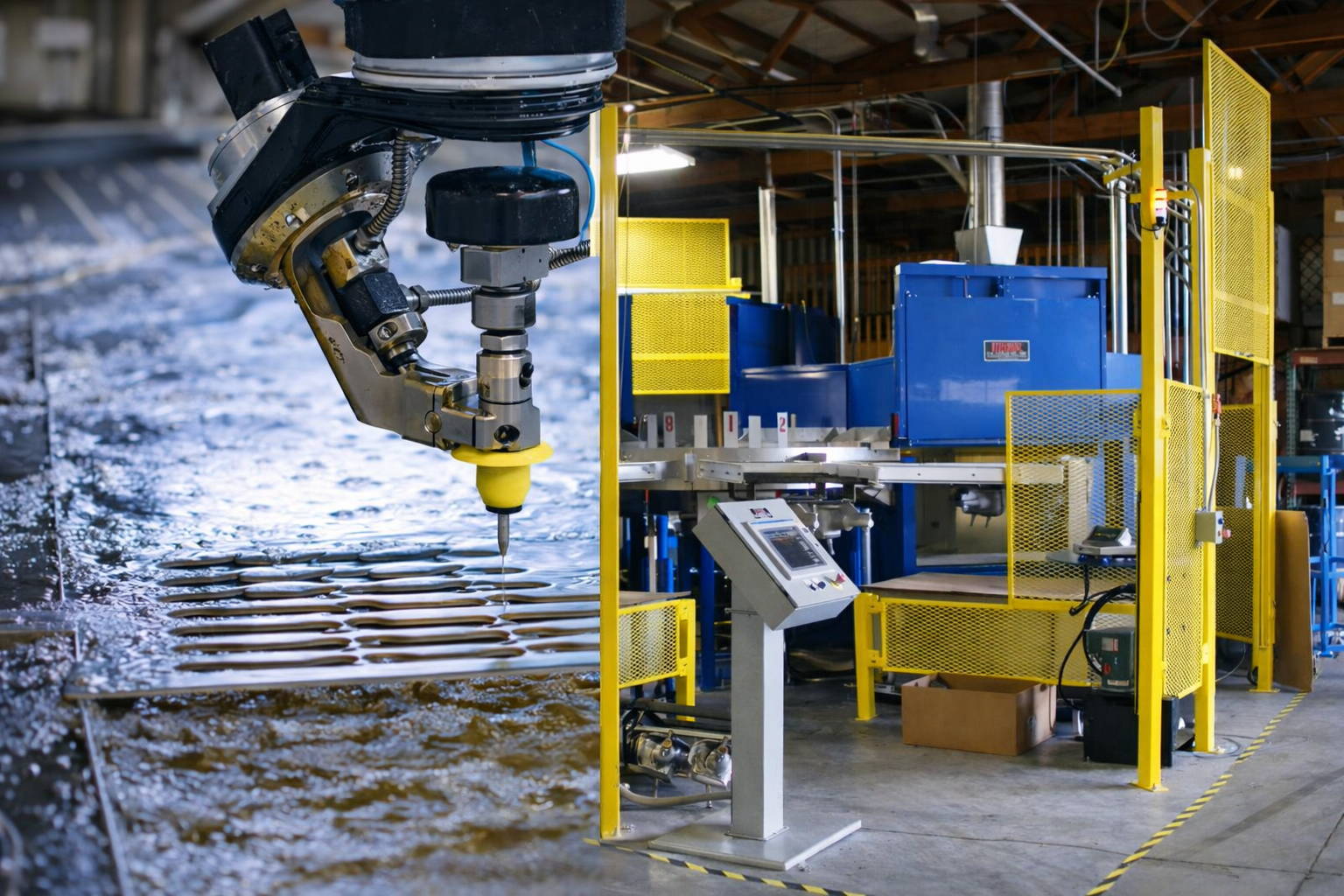
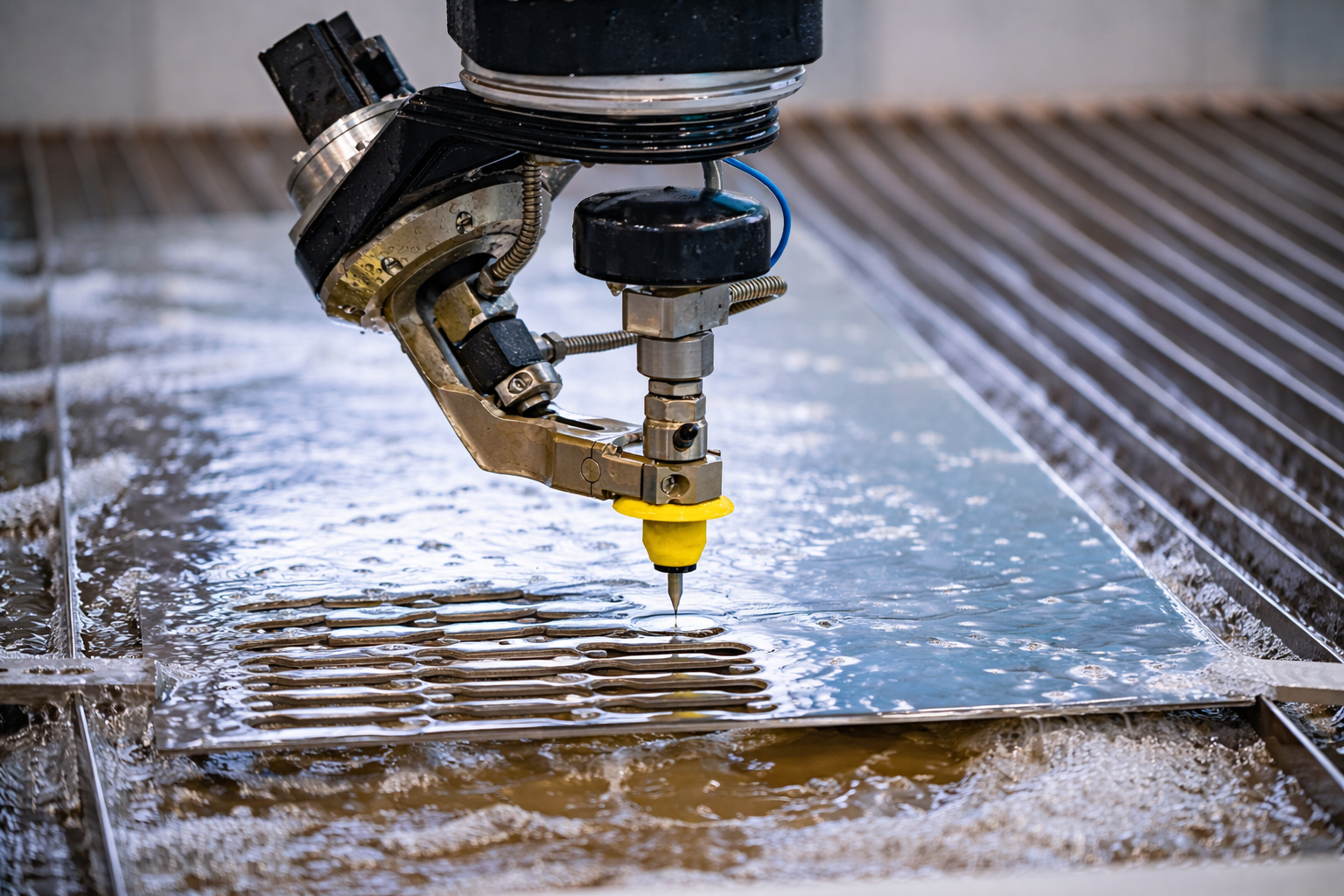
Water jet core removal uses high-pressure water to mechanically break down and flush out ceramic cores from cast components.
Key advantages
- Typically fast processing time
- No chemical exposure involved
- Suitable for parts with relatively open and accessible internal channels
- Can be integrated into automated processes
Considerations
- Effectiveness depends on accessibility of internal features
- May be less effective for deeply enclosed or difficult-to-access internal passages
- Complex geometries with blind or narrow channels can present challenges
Water jet is generally well suited to components where internal features are accessible and do not require penetration into fully enclosed cavities.
Caustic Leaching: Strengths and Considerations
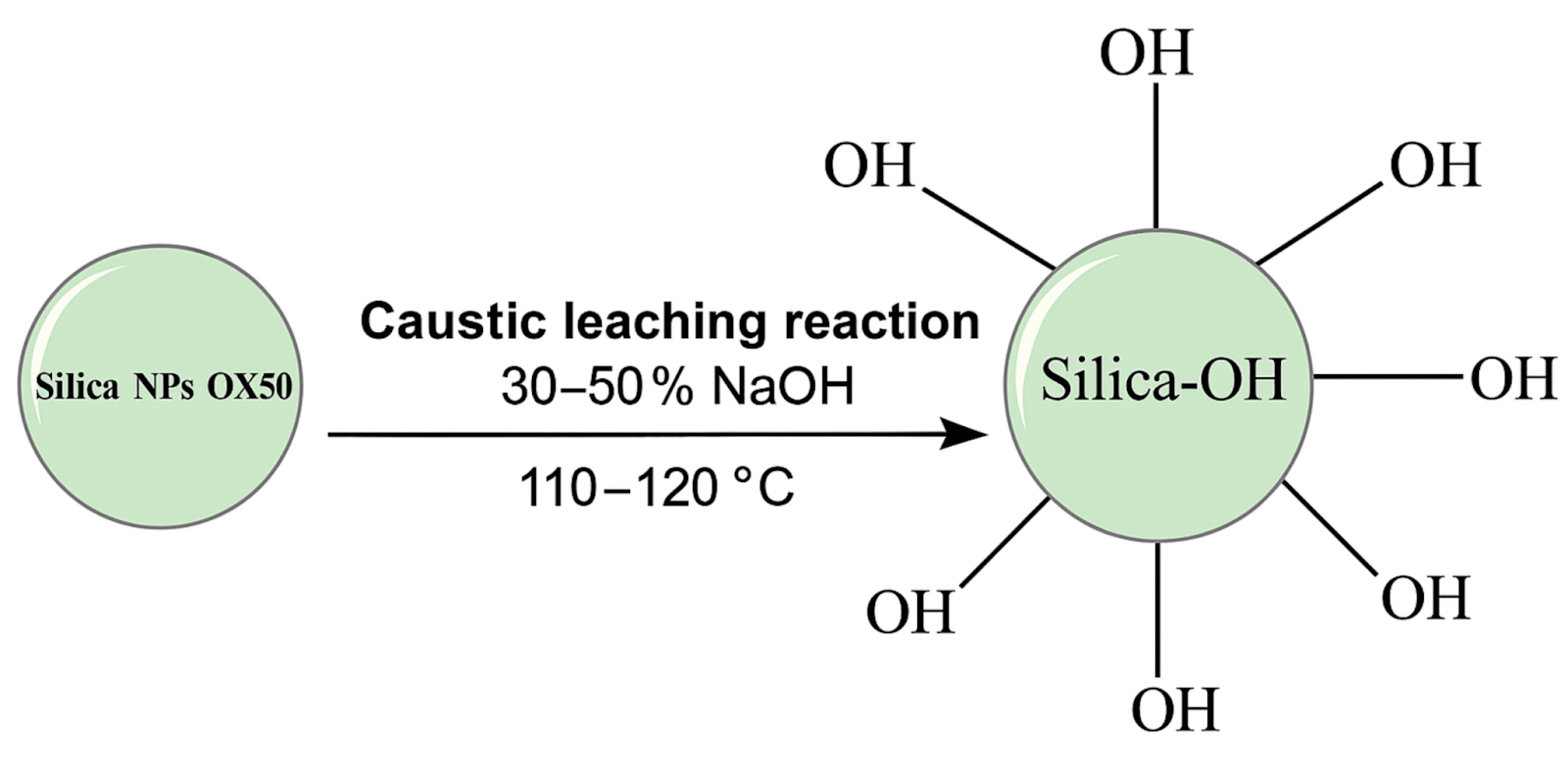
Caustic leaching is a chemical core removal process that uses alkaline solution. The caustic leaching removes ceramic cores through controlled chemical dissolution, typically using alkaline solutions under elevated temperature and pressure conditions.
Key advantages
- Effective for complex internal geometries
- Capable of reaching enclosed or difficult-to-access internal features
- Enables more thorough core removal, particularly in intricate structures
Considerations
- Generally requires longer processing cycles compared to mechanical methods
- Requires careful control of temperature, concentration, and process time
- Involves chemical handling and dedicated system management
Caustic leaching is commonly applied where internal complexity makes mechanical removal methods less effective or impractical.
For a more detailed overview of the process, you can refer to Waterson’s guide on caustic leaching in precision casting and contact us at info@watersoon.com !
Key Comparison: Water Jet vs Caustic Leaching
| Criteria | Water Jet | Caustic Leaching |
| Geometry complexity | More suitable for simpler designs | More suitable for complex geometries |
| Deep internal channels | Depends on accessibility | Strong capability for enclosed features |
| Processing time | Typically faster | Generally longer processing cycles |
It is important to note that the selection is not based on which method is universally superior, but rather on which method is more appropriate for the specific part design, geometry, and application requirements.
When a Hybrid Approach Makes Sense
In some applications, combining both methods can provide an effective and practical solution.
For example, caustic leaching may first be used to dissolve and loosen the ceramic core, followed by high-pressure water jetting to flush out residual fragments within internal channels, thereby improving overall cleaning effectiveness.
Such a hybrid approach can help balance processing efficiency with the need for thorough core removal, particularly in components with mixed geometric characteristics.
Waterson Corporation’s integrated technical capabilities
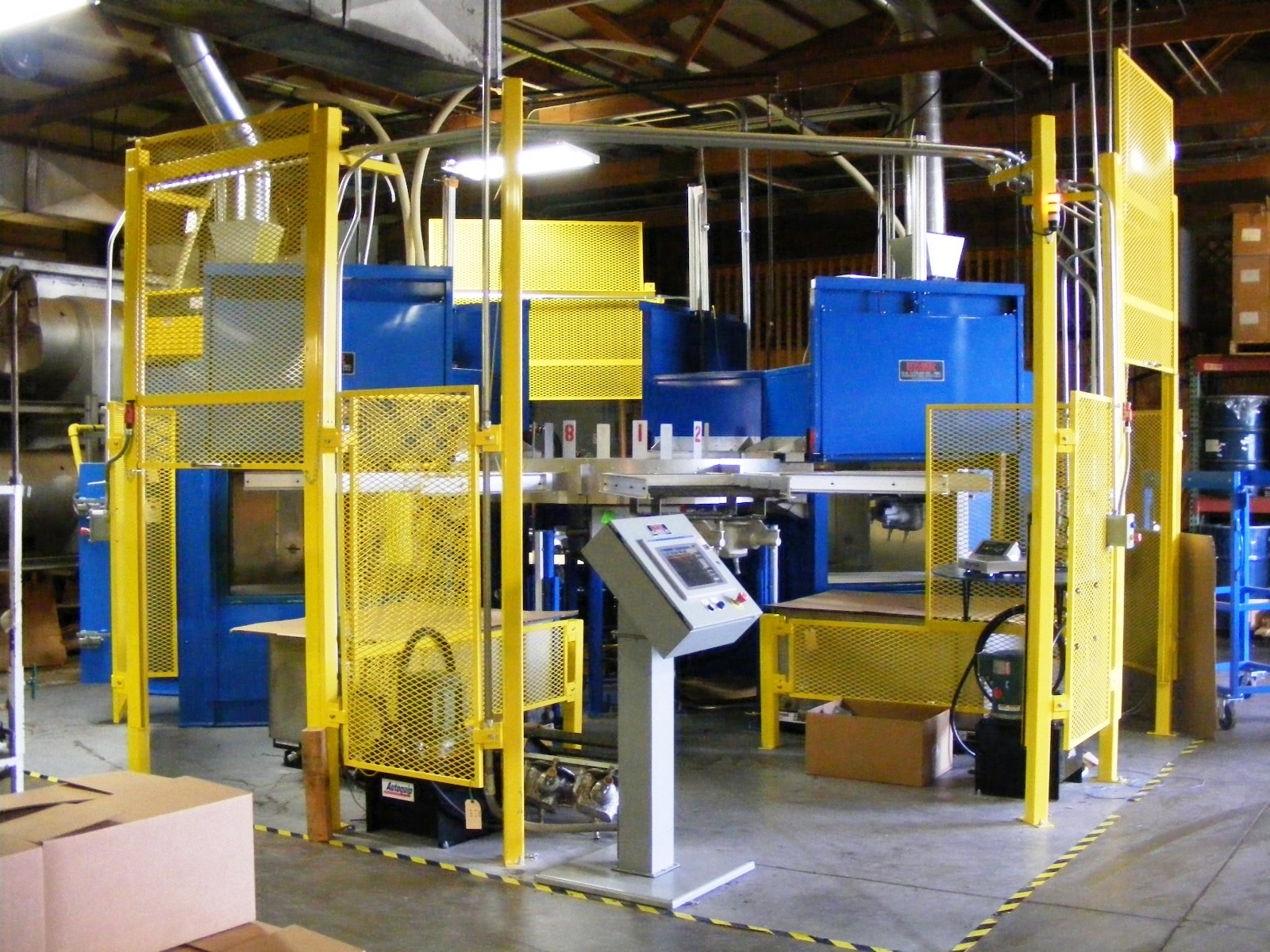
At Waterson Corporation, we operate a newly designed enclosed caustic degreasing and leaching system to provide stable and controlled core removal for precision casting components. Process parameters are carefully managed to support consistent results, particularly for parts with complex internal structures where reliability is critical.
Depending on the part design and customer requirements, water jet processing can also be incorporated as part of a combined approach. This allows for a more flexible solution, balancing efficiency with the need for effective internal cleaning.
Not sure which core removal method is best suited to your casting design?
Choosing between water jet and caustic leaching depends on several factors, including internal geometry, accessibility, and required performance characteristics.
Water jet may be appropriate for parts with more accessible internal features, while caustic leaching is often applied where complex or enclosed geometries require a more comprehensive removal approach.
In practice, a combination of both methods may be considered to achieve the desired balance between efficiency and completeness.
Our engineering team can support you in evaluating internal geometry, material selection, and processing requirements to determine an appropriate solution.
Contact Waterson Corporation at info@waterson.com to discuss your precision casting project.
Why Choose Waterson Investment Casting?
At Waterson Corporation, we don’t just offer competitive pricing, we deliver real value. Our expertise in precision investment casting is built on what matters most to today’s global buyers:
- Reliable part performance
- Dimensional accuracy
- Consistent quality
- Regulatory compliance(CBAM, RoHS, REACH )
We understand that in markets like the U.S. and EU, your casting supplier needs to meet more than just cost targets. You need a partner who supports your sustainability goals, provides full traceability, and helps reduce your total cost of ownership through dependable supply and technical support.
If you’re looking for a casting manufacturer that delivers long-term value, not just parts, we’re here to help. Contact us at info@waterson.com to discuss your next project. Let’s build something better together!
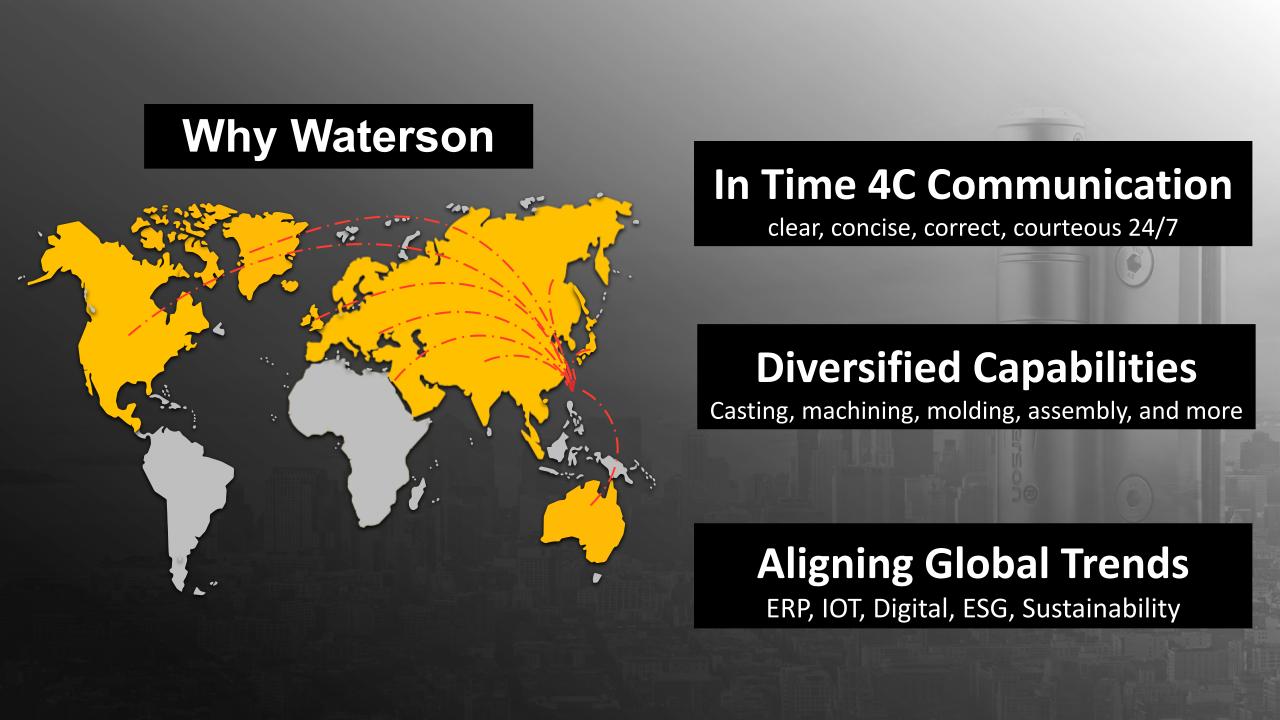
Why Waterson Investment Casting Methods Stand Out
Waterson Corporation is a leading metal products manufacturer specializing in components for the most challenging global applications. Clients benefit from Waterson’s investment casting process, which excels in precision, durability, and surface quality—delivering unmatched reliability and performance across diverse applications.
- Precision Casting: Intricate, robust components for demanding industries.
- Superior Finish: Near-perfect surfaces with minimal processing.
- ISO 2768 Standard: Exceeds aerospace, marine, and petrochemical benchmarks.
- Versatile Materials: Tailored solutions in stainless steel and alloys with efficient material cost.
Waterson Stainless Steel Investment Casting Solutions
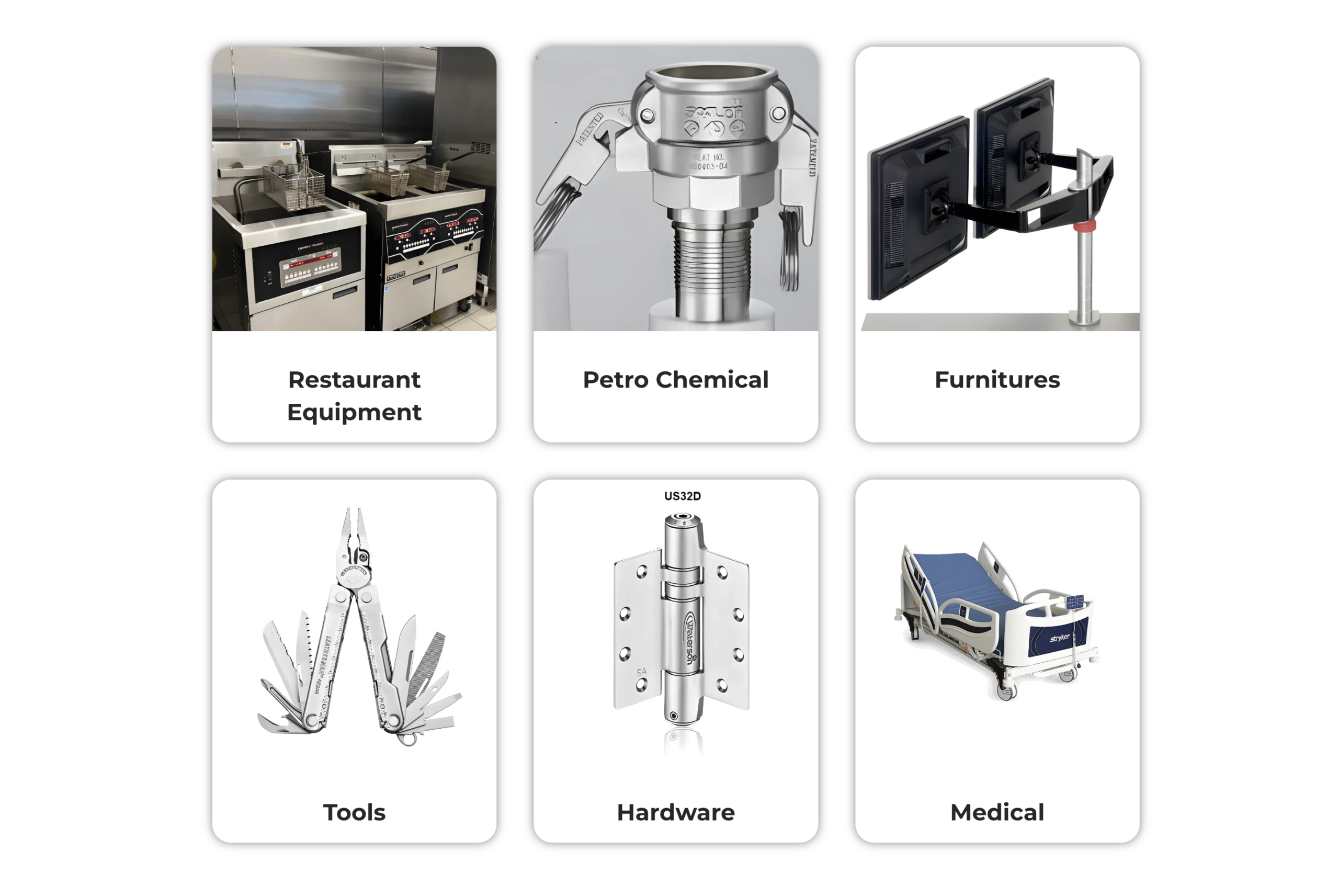
Waterson Precision Investment Casting is a wax-based foundry located in Taiwan specializing in stainless steel precision casting. It delivers high-volume, consistently high-quality castings to industries such as petrochemicals, medical equipment, marine, hand tools, professional safety equipment and wireless communication equipment. With an impressive 95% above self-production rate, Waterson’s production line encompasses mold design, fluid analysis, wax model creation, shell making, dewaxing, metal pouring, post-processing (e.g., acid pickling, alkaline treatment), sandblasting, heat treatment, machining, assembly, and packaging. Its stainless steel production line supports materials such as 304 (CF8), 316 (CF8M), and 17-4 stainless steel. Currently, there is available production capacity, feel free to contact info@waterson.com.