When developing a metal component, choosing the right manufacturing process can make a significant difference in tooling cost, production efficiency and overall part cost.
Metal Injection Moulding (MIM), Powder Metallurgy (Press and Sinter), and Investment Casting can all produce high-quality metal parts, but each process has a different manufacturing sweet spot.
In simple terms:
- MIM: Small + Complex + High Volume + Tight Tolerance
- Press and Sinter Powder Metallurgy: High Volume + Press-Friendly Geometry + Low Unit Cost
- Investment Casting: Complex 3D Geometry + Broader Size and Weight Range + Flexible Production Volume + Broad Alloy Choice
The key is not simply asking which process can make the part, but which process can manufacture it most efficiently.
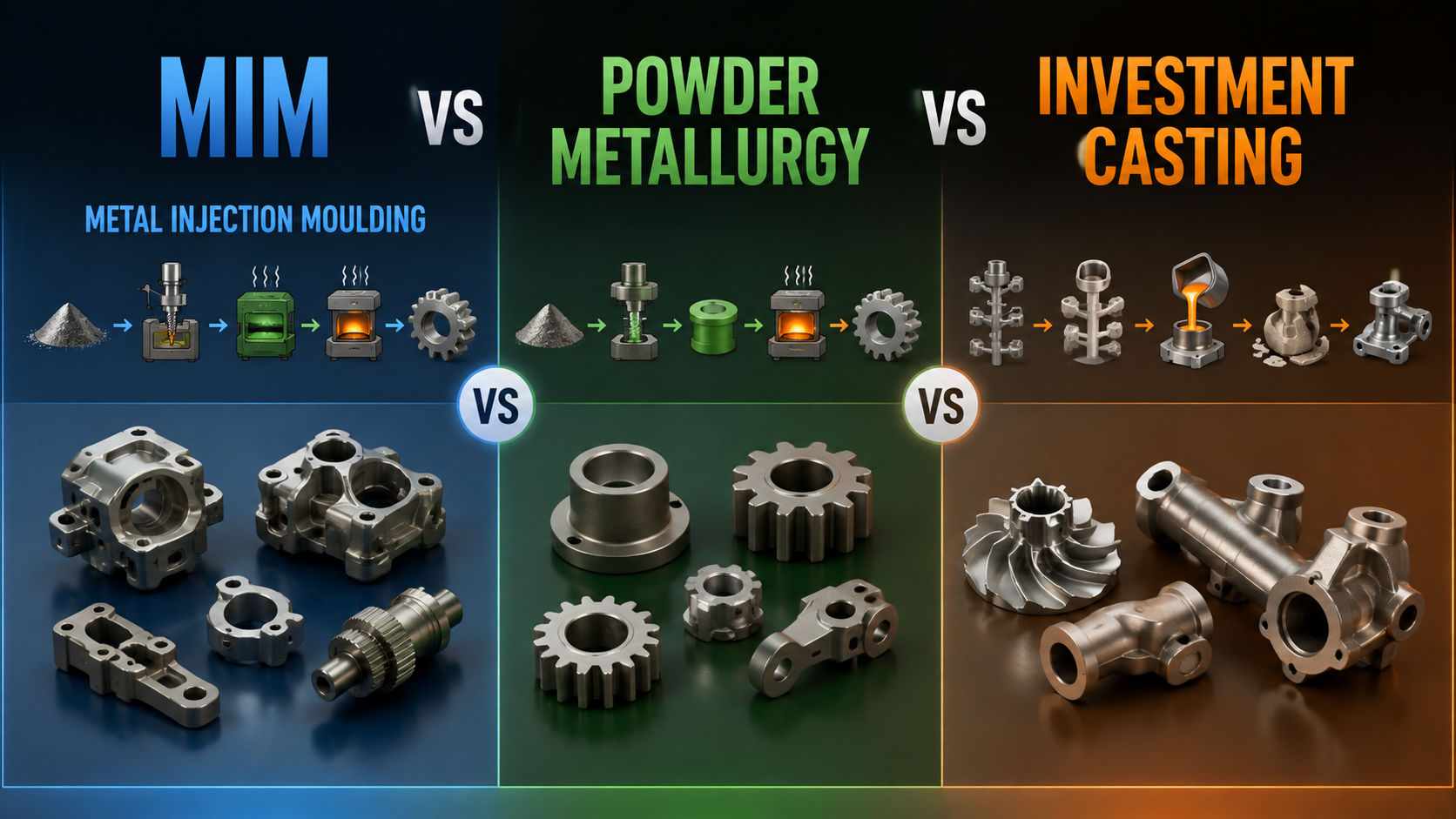
MIM vs Powder Metallurgy vs Investment Casting
| Comparison Factor | Metal Injection Moulding (MIM) | Powder Metallurgy (Press and Sinter) | Investment Casting |
|---|---|---|---|
| Best-Suited Parts | Small, complex and high-precision metal parts | High-volume parts with press-friendly geometry | Complex 3D metal parts with broader size and weight requirements |
| Production Volume | Medium to high volume | High to very high volume | Low, medium and high volume |
| Part Size and Weight | Most economical for smaller parts | Limited by compaction and press capability | Greater flexibility in part size and weight |
| 3D Geometry | Very high complexity | Moderate; limited by compaction and die ejection | Very high; suitable for complex contours and irregular shapes |
| Dimensional Accuracy | Excellent; typically around ±0.3% | Good repeatability | Good as-cast accuracy; critical dimensions can be CNC machined |
| Wall Thickness | More uniform wall thickness is preferred | Influenced by powder filling and compaction | More flexible section thickness |
| Material Selection | Broad, depending on available MIM feedstock | Broad powder-based material options | Very broad alloy selection |
| Tooling Investment | Generally high | Moderate to high | Flexible; 3D-printed patterns can support low-volume development |
| Near-Net-Shape Capability | High | High | Very high |
| Strongest Advantage | Small + Complex + High Volume | Very High Volume + Low Unit Cost | Complex Geometry + Flexible Volume + Broad Alloy Choice |

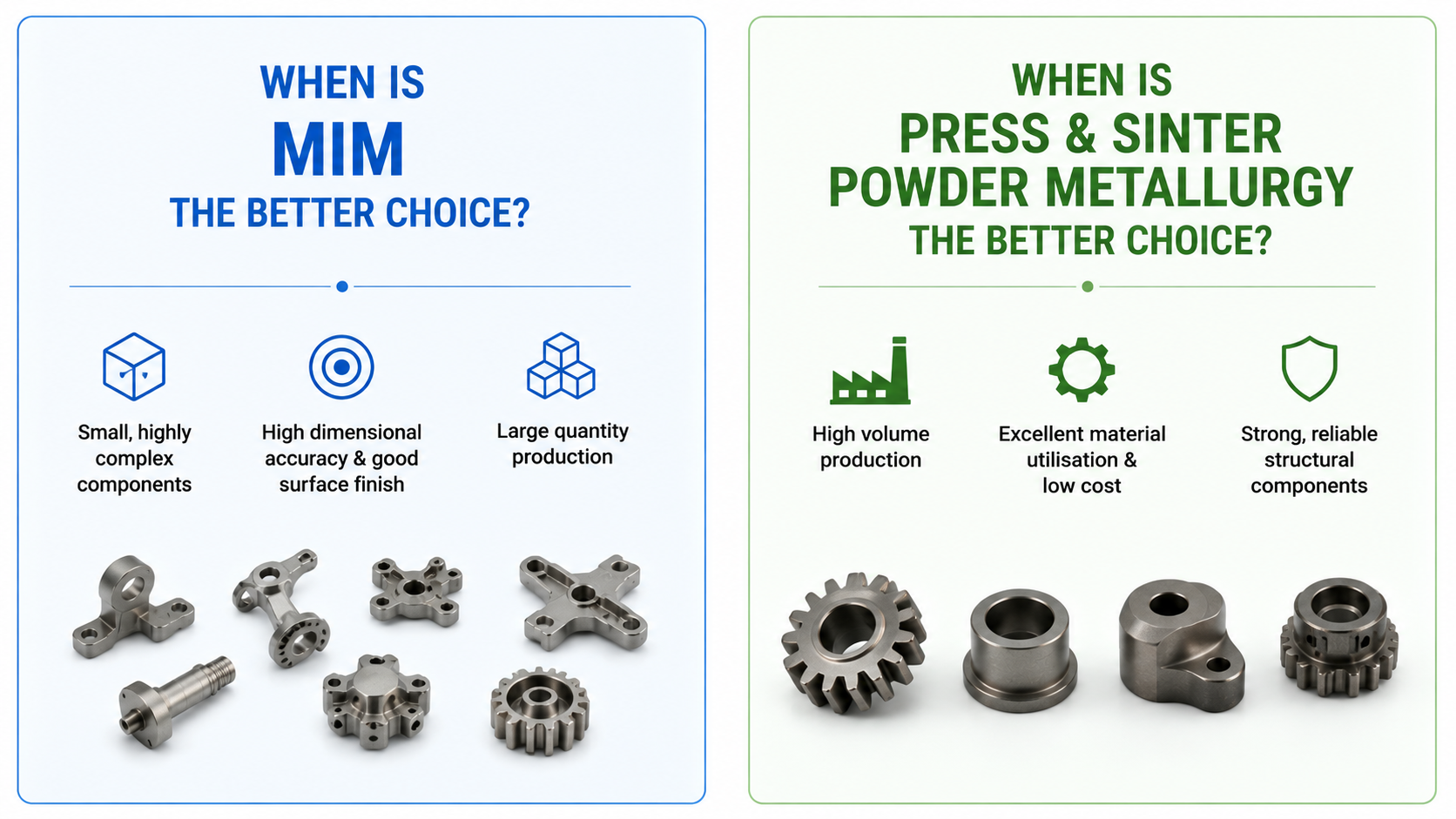
When Is MIM the Better Choice?
MIM is particularly suitable for small, highly complex metal components produced in large quantities.
It can form fine details, holes, grooves and other complex features while providing good dimensional accuracy and surface finish.
However, MIM normally requires relatively high investment in injection tooling and process development. As part size increases, more feedstock is required and debinding becomes more demanding.
When Is Press and Sinter Powder Metallurgy the Better Choice?
Conventional Powder Metallurgy is particularly strong in high-volume production of parts that can be efficiently compacted inside a rigid die.
Typical applications include gears, bushings, cams and structural components.
When the geometry is suitable for the pressing process, Powder Metallurgy can provide excellent material utilisation and a very competitive unit cost.
Its main limitation is design freedom. Side holes, undercuts and highly three-dimensional shapes may require additional machining or secondary operations.
When Does Investment Casting Become More Attractive?
Investment Casting becomes particularly attractive when a component starts moving outside the ideal MIM or Press and Sinter manufacturing window.
For example, when:
- the part becomes larger or heavier
- annual production volume is not high enough to justify MIM tooling costs
- the design contains complex 3D geometry
- the component has greater variation in section thickness
- a broader range of alloys is required
- extensive CNC machining, welding or assembly could potentially be reduced
Investment Casting is a near-net-shape manufacturing process, allowing complex geometry to be formed close to its final shape.
This does not mean that CNC machining must be eliminated completely.
Instead, Investment Casting can form the main geometry while machining is reserved for critical features such as precision bores, datums, sealing surfaces and mating areas. This combination can provide a practical balance between design flexibility, dimensional accuracy and total manufacturing cost.
Have a complex metal part or looking for a more flexible manufacturing solution? Contact info@waterson.com to see how Investment Casting can support your design, production volume and cost requirements.
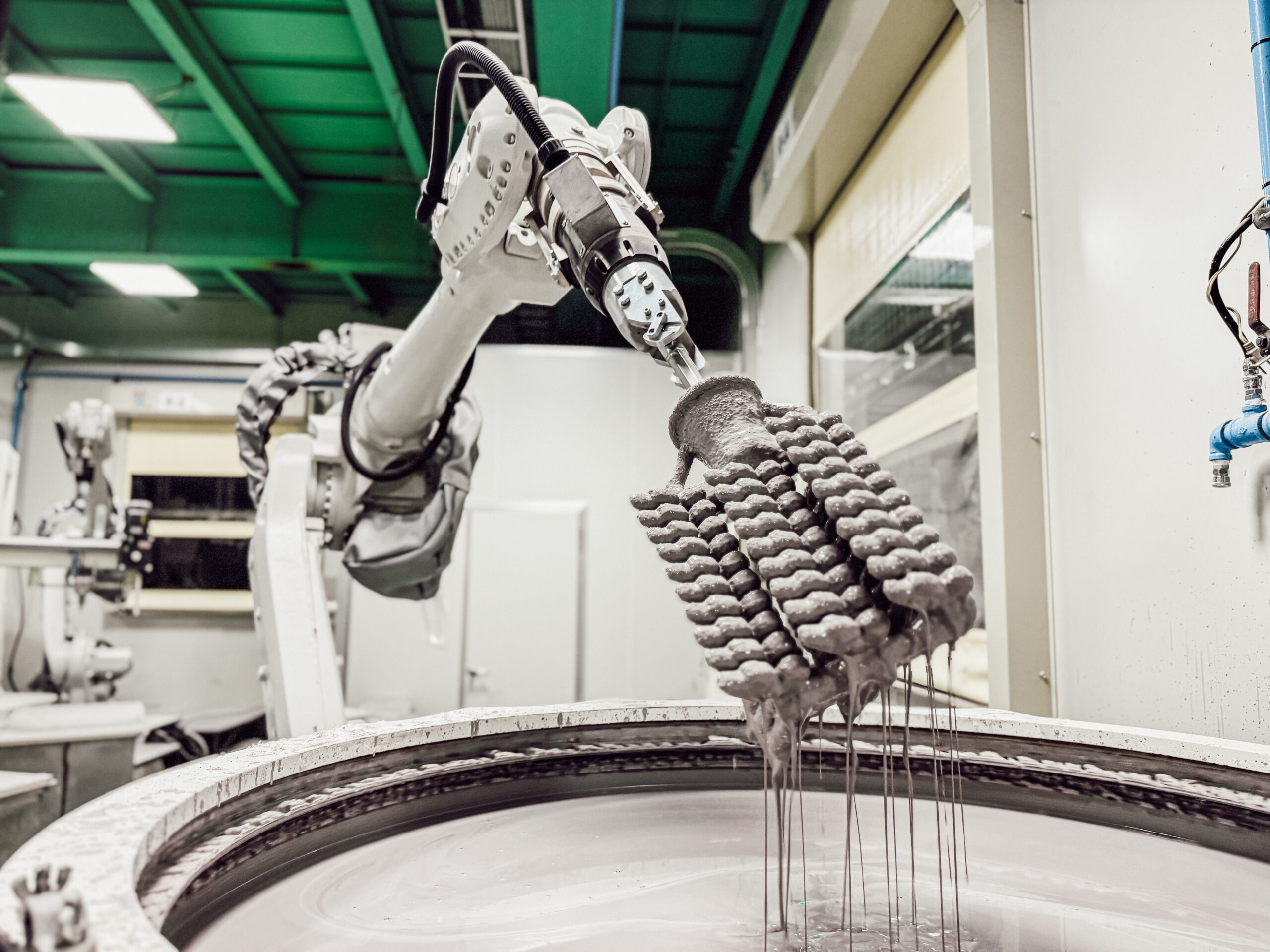
Flexible Production from Prototype to Volume Manufacturing
Another advantage of Investment Casting is production flexibility.
For low-volume development, 3D-printed patterns can be used to produce prototype or sample castings without immediately investing in conventional wax tooling.
Once the design is approved and production demand increases, the project can move to conventional wax tooling for more economical repeat production.
This makes Investment Casting suitable for different stages of product development: 3D Prototype → Design Validation → Tooling → Volume Production
Choosing the Right Metal Manufacturing Process
There is no single process that is best for every metal part.
MIM is strongest for small, complex and high-volume precision components.
Press and Sinter Powder Metallurgy is strongest for very high-volume parts with geometries designed for efficient powder compaction.
Investment Casting becomes increasingly attractive when manufacturers require complex three-dimensional geometry, larger or heavier components, flexible production volumes or broader alloy selection.
In many projects, both MIM and Investment Casting may technically be able to manufacture the same component.
The real question is: Which process provides the best overall balance of part size, geometry, annual volume, material, tooling investment, machining requirements and total cost?
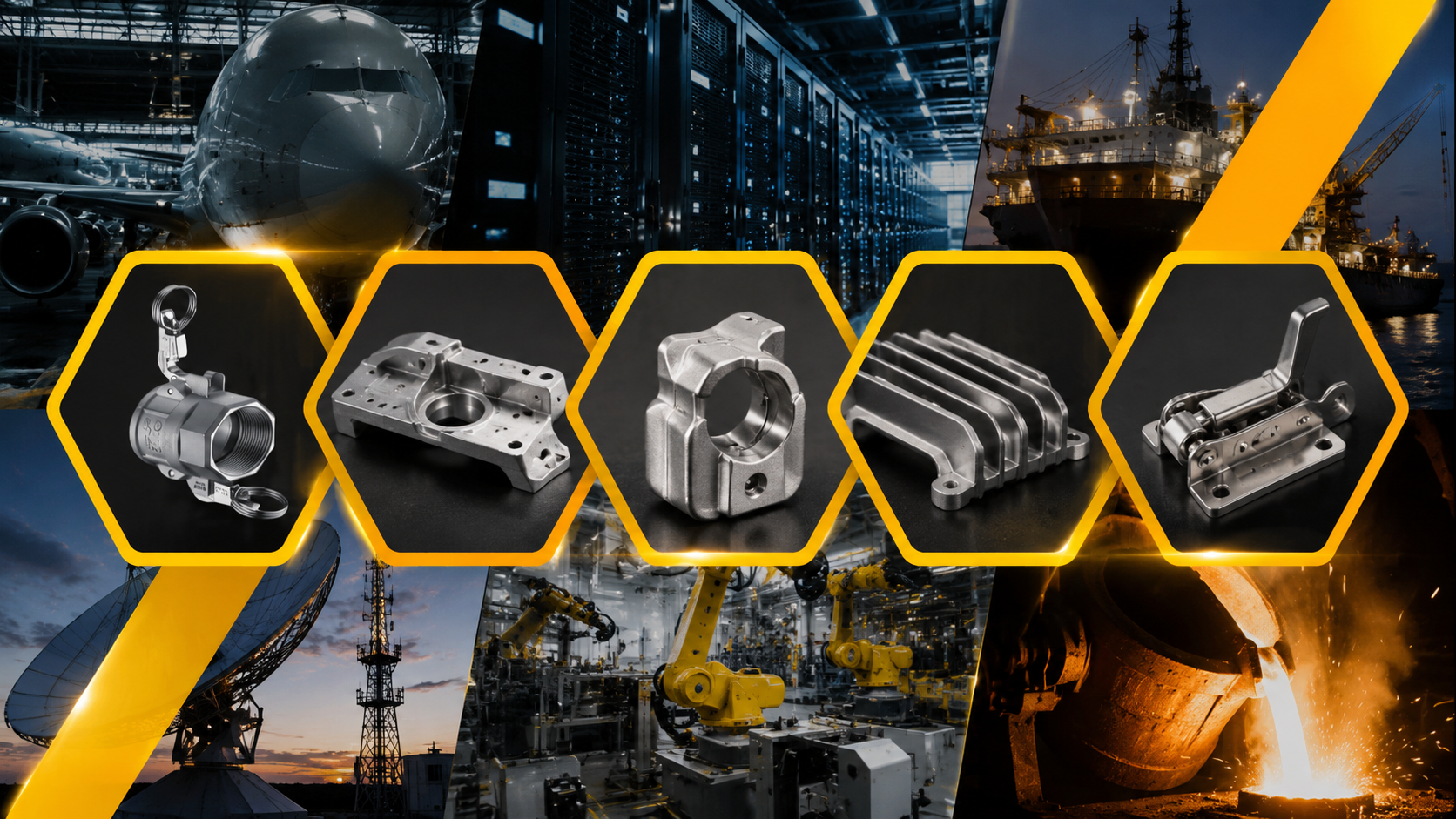
Waterson Corporation: Your Metal Solutions Provider
With more than 40 years of Investment Casting and metal manufacturing experience, Waterson Corporation supports customers from early product development through volume production.
Our capabilities include:
- Investment Casting
- 3D prototyping for low-volume development
- tooling development
- CNC machining
- heat treatment
- surface finishing
- inspection and NDT services
- economical volume production
If a component is better suited to Metal Injection Moulding, Waterson can also work with our long-term MIM manufacturing partners to support customer development requirements.
As a metal solutions provider, our goal is not simply to recommend Investment Casting for every project.
Waterson Corporation help customers evaluate the part and identify a practical manufacturing solution based on design, material, production volume, quality requirements and total cost.
Why Choose Waterson Investment Casting?
At Waterson Corporation, we don’t just offer competitive pricing, we deliver real value. Our expertise in precision investment casting is built on what matters most to today’s global buyers:
- Reliable part performance
- Dimensional accuracy
- Consistent quality
- Regulatory compliance(CBAM, RoHS, REACH )
We understand that in markets like the U.S. and EU, your casting supplier needs to meet more than just cost targets. You need a partner who supports your sustainability goals, provides full traceability, and helps reduce your total cost of ownership through dependable supply and technical support.
If you’re looking for a casting manufacturer that delivers long-term value, not just parts, we’re here to help. Contact us at info@waterson.com to discuss your next project. Let’s build something better together!
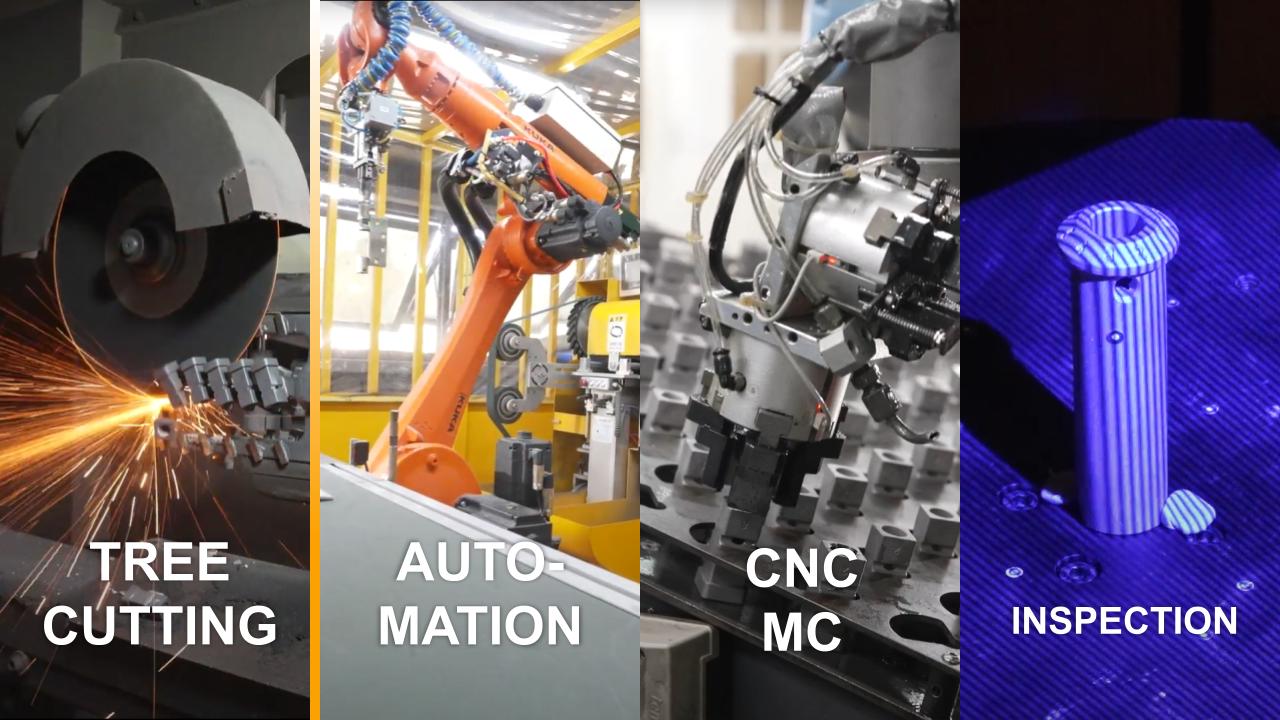
Why Waterson Investment Casting Methods Stand Out
Waterson Corporation is a leading metal products manufacturer specializing in components for the most challenging global applications. Clients benefit from Waterson’s investment casting process, which excels in precision, durability, and surface quality, delivering unmatched reliability and performance across diverse applications.
- Precision Casting: Intricate, robust components for demanding industries.
- Superior Finish: Near-perfect surfaces with minimal processing.
- ISO 2768 Standard: Exceeds aerospace, marine, and petrochemical benchmarks.
- Versatile Materials: Tailored solutions in stainless steel and alloys with efficient material cost.
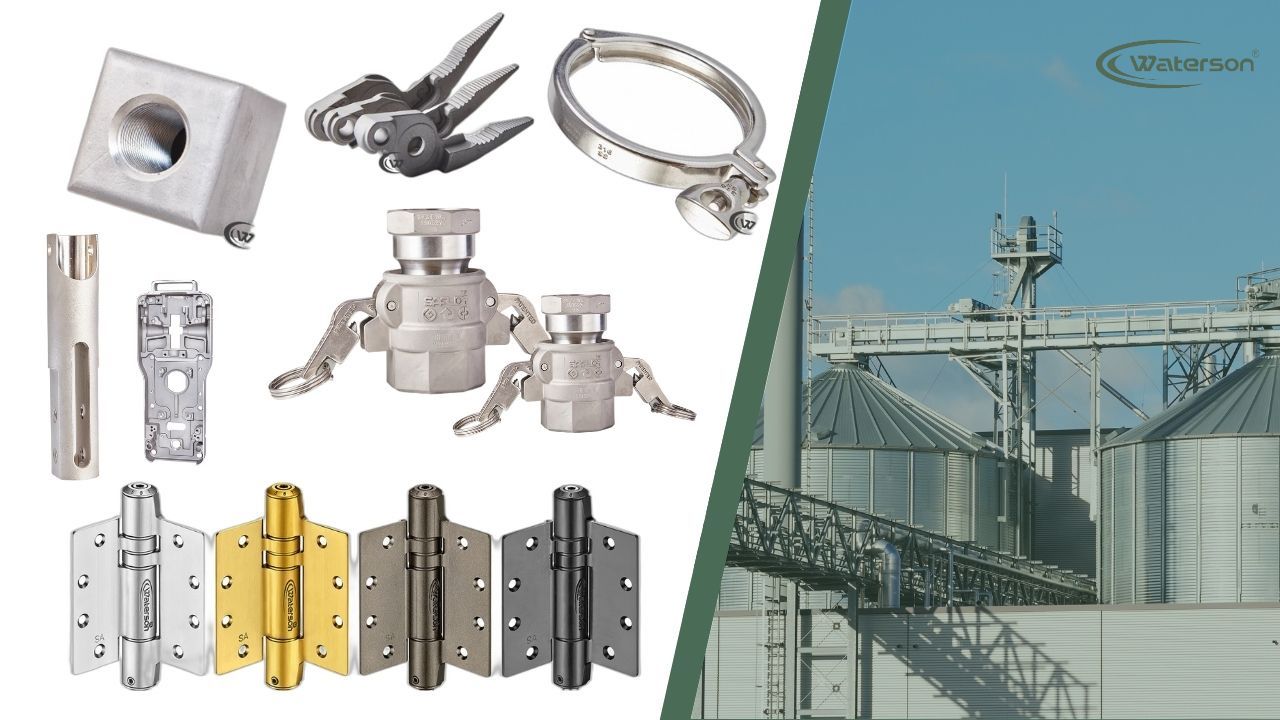
Waterson Stainless Steel Investment Casting Solutions
Waterson Precision Investment Casting is a wax-based foundry located in Taiwan specializing in stainless steel precision casting. It delivers high-volume, consistently high-quality castings to industries such as petrochemicals, medical equipment, marine, hand tools, professional safety equipment, AI equipment and data center Infrastructure, and wireless communication equipment. With an impressive 95% above self-production rate, Waterson’s production line encompasses mold design, fluid analysis, wax model creation, shell making, dewaxing, metal pouring, post-processing (e.g., acid pickling, caustic leaching), sandblasting, heat treatment, machining, assembly, and packaging. Its stainless steel production line supports materials such as 304 (CF8), 316 (CF8M), and 17-4 stainless steel. Currently, there is available production capacity, feel free to contact info@waterson.com.